This project is a B2B wholesale inventory management and operations platform built for the people who keep things running smoothly, like admins, customer service staff, and managers.Before this platform, running a wholesale business meant relying on spreadsheets. Admins had to enter orders in one Excel file, check inventory in another, and constantly switch between files. The aim was simple: combine all these tasks into one system. Now, inventory management, order processing, customer records, payment tracking, and reporting are all in one place, connected and easy to see.
- Give admins one platform to manage everything, so they can work efficently without switching between tools.
- Build trust with wholesale buyers through transparency and smoother workflows.
- Help admins make better decisions with the right insights, so they can plan ahead instead of reacting.
MY ROLE
UX Designer | Product Designer | UX Researcher
Cross-functional collaboration
PM&BA | Engineering
PROBLEM STATEMENT
Wholesale admins handle a lot each day, from orders and inventory to customer contacts, invoices, and fulfillment. But all this information is scattered across different places. Without a single system, they have to juggle several tools, check details by hand, and keep track of everything in their heads. This means the team spends more time managing their tools than running the business, and mistakes often surface only after it’s too late.
DESIGN CHALLENGE
How might we create a single platform that lets wholesale admins see everything they need, make daily tasks easier, and spot mistakes early? This way, the team cann feel confident and stay ahead, rather than always trying to catch up.
DESIGN SOLUTION
We aim to design a platform that moves admins from chaos to clarity, and finally to control. Giving them one place to see everything, at without friction, and stay ahead of what's coming.
Designing for Mental Models
We want to design a platform around
three primary mental stages to transform the user experience.


The right information, exactly when it’s needed
Every admin knows the feeling. You open your laptop and you already don't know where to start. Not because you're disorganized, but because the information you need has never lived in one place. You piece it together from different tools, different tabs, different systems. And by the time you have the full picture, half your morning is already gone.
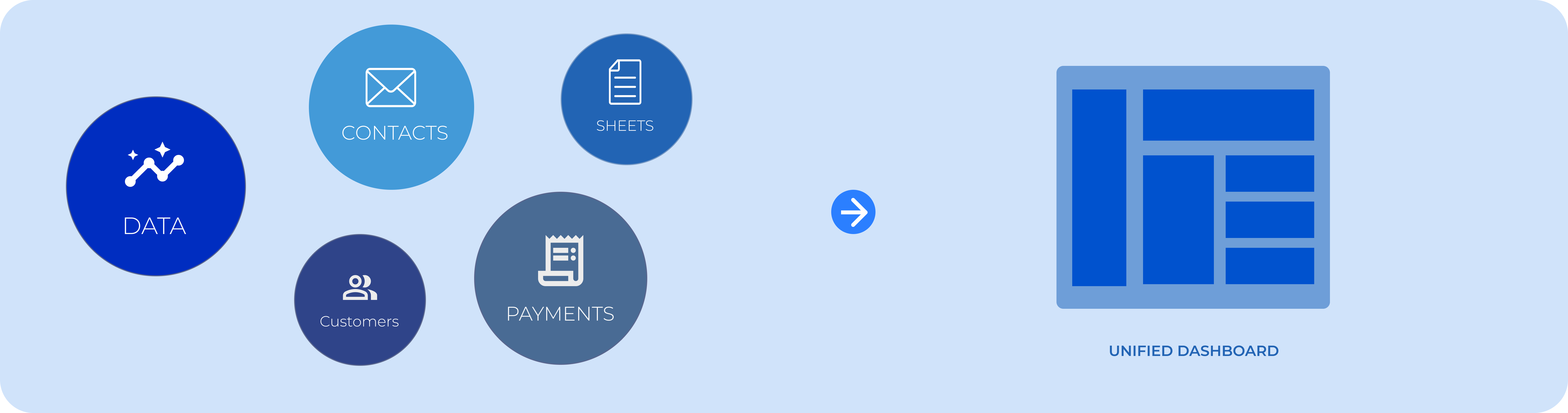
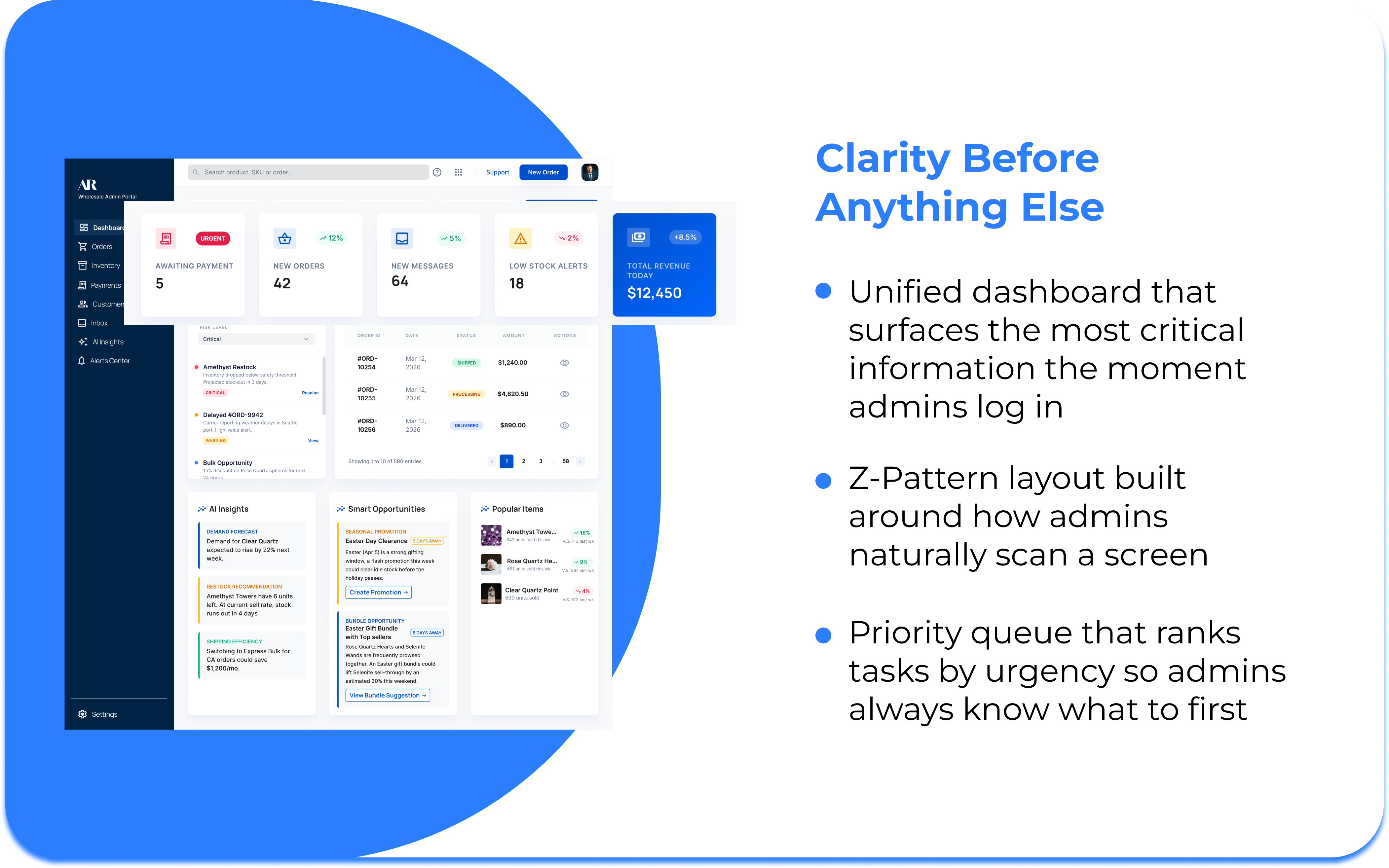
We created a unified dashboard that shows all the important information at a glance.This way, admins will not have to search through different tools and can find everything they need in one place.
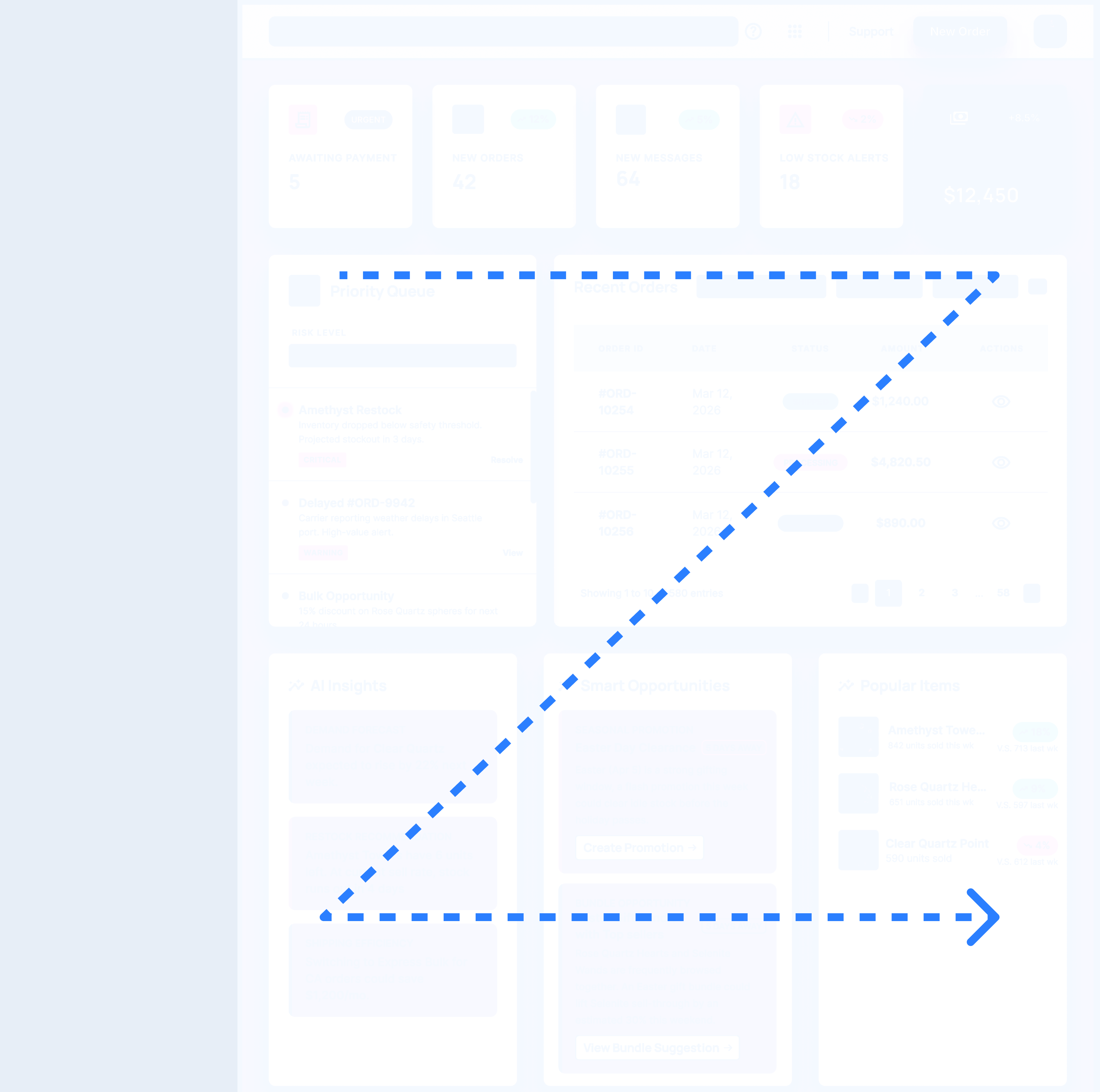
Natural Scanning, Zero Confusion
Users read in a Z-pattern, a natural reading pattern. The dashboard leverages this by placing key information where administrators notice it quickly, ensuring fast orientation. Sections are ordered to guide admins step by step.
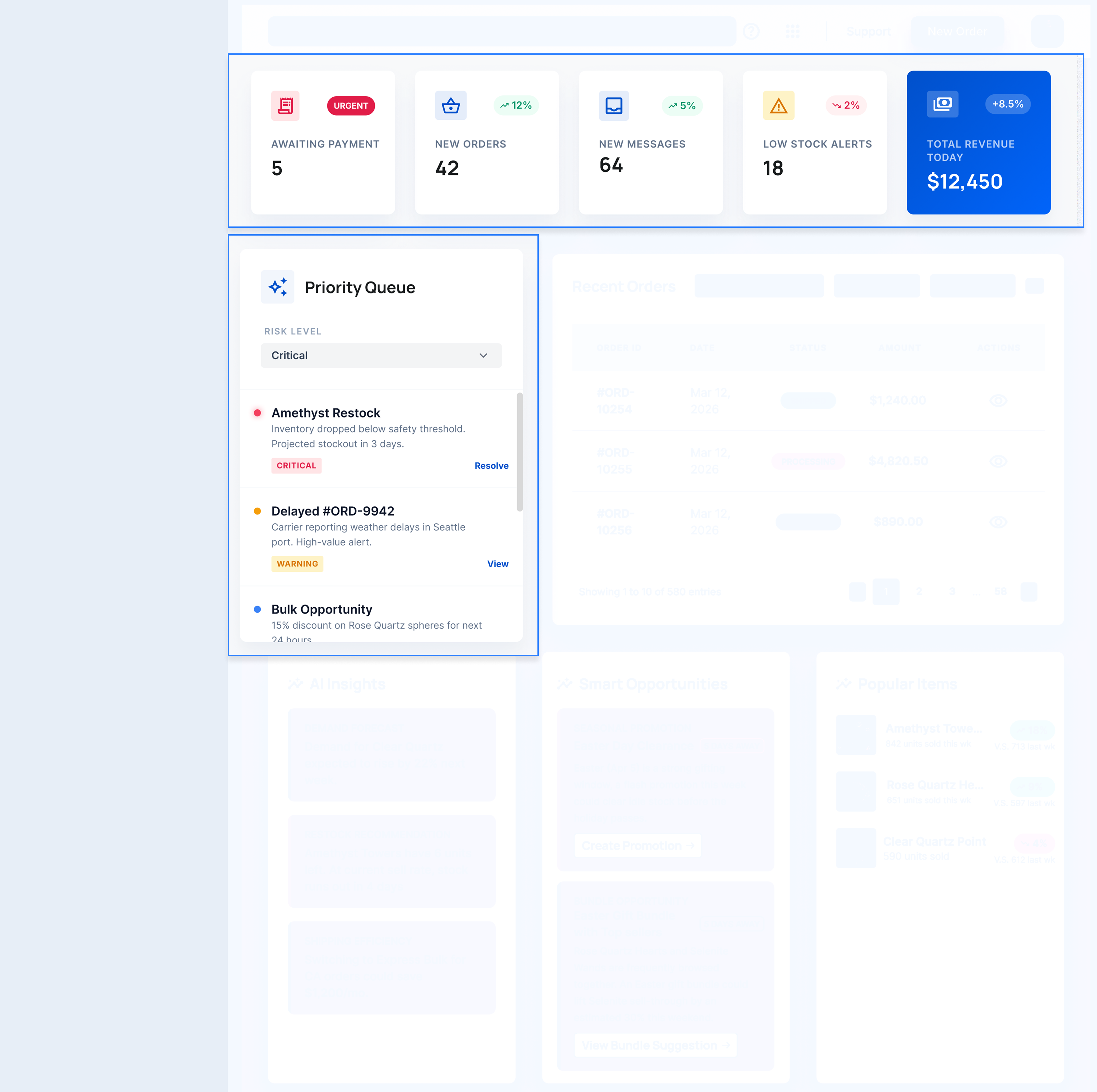
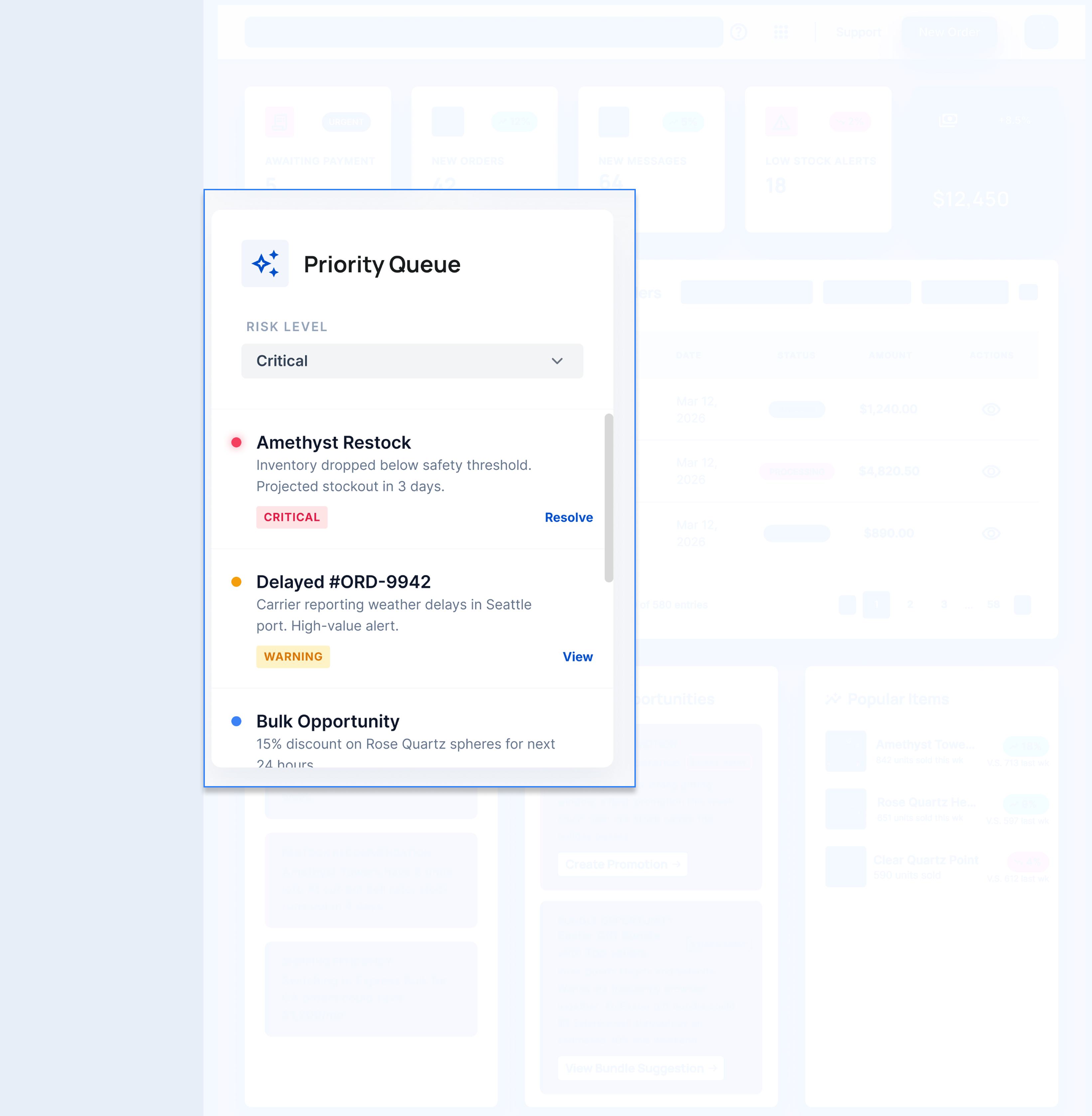
Risk-ranked Priority Queue
The Priority Queue sorts tasks by risk level, so admins can easily see what to handle first without having to sort through everything themselves.
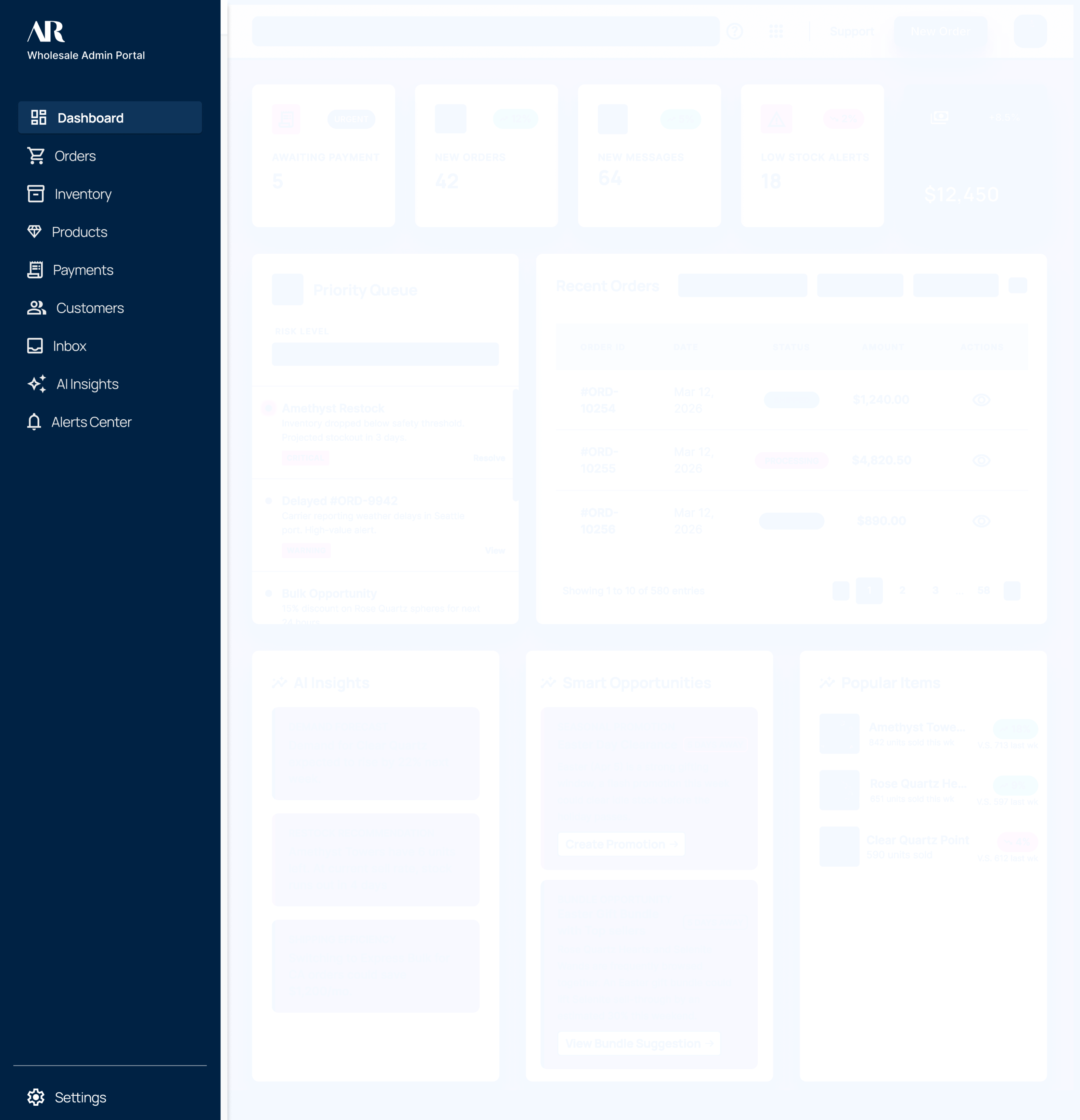
Everything in One Place
Everything an admin need will find in this dashboard. It combines orders, inventory, Payments, Customers, Inbox, AI Insights, Alerts Center
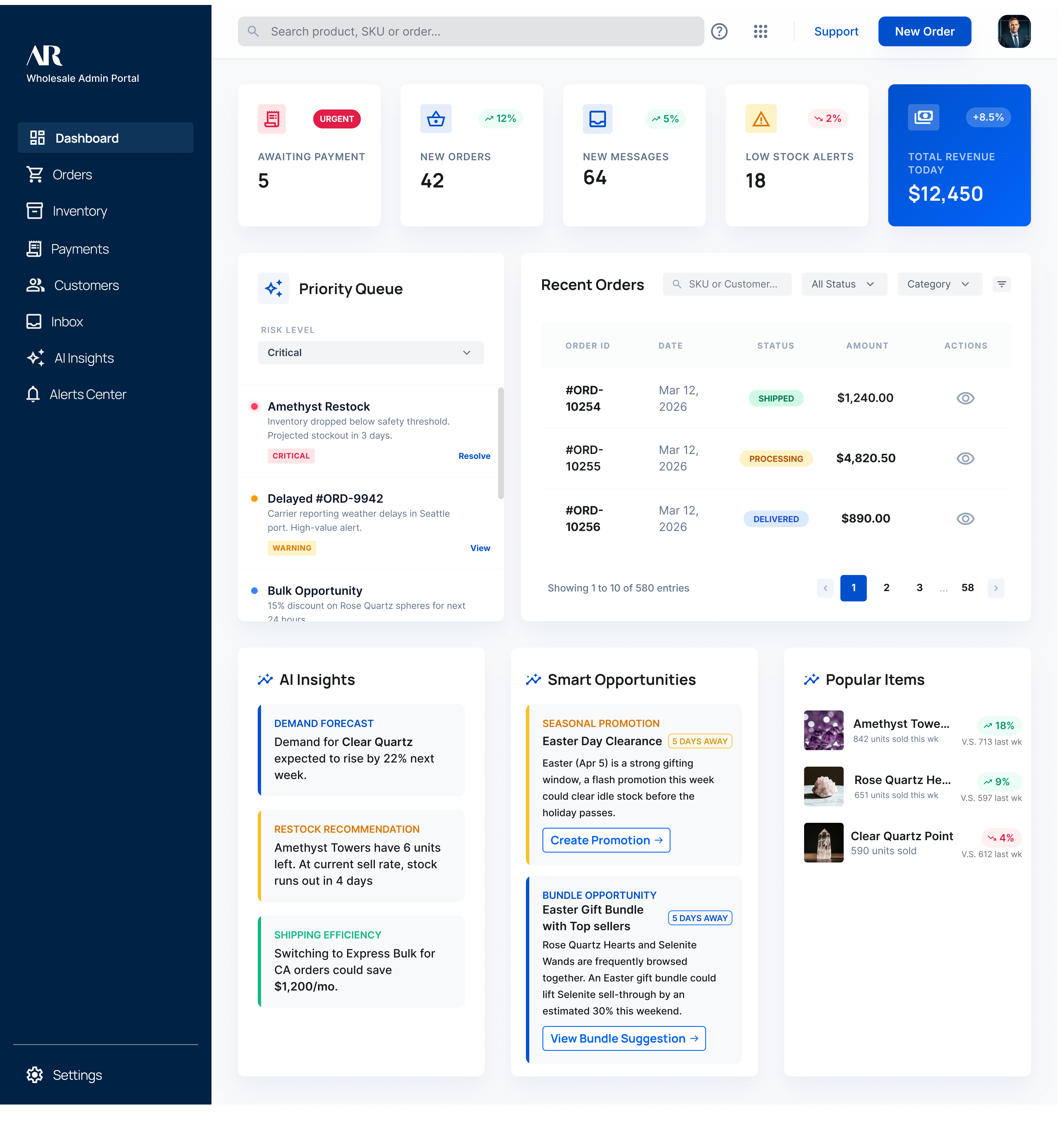
Dashboard

Less Clicks, More Done
You're in the middle of your work. You spot something that needs fixing in the inventory list ,a stock level, a status, a pending request.
So you click through to fix it. Navigate back. Find your place again. Repeat, ten times before lunch.
It quietly breaks the focus that good decision-making depends on. You spend the whole day movingbut it never quite feels like progress.
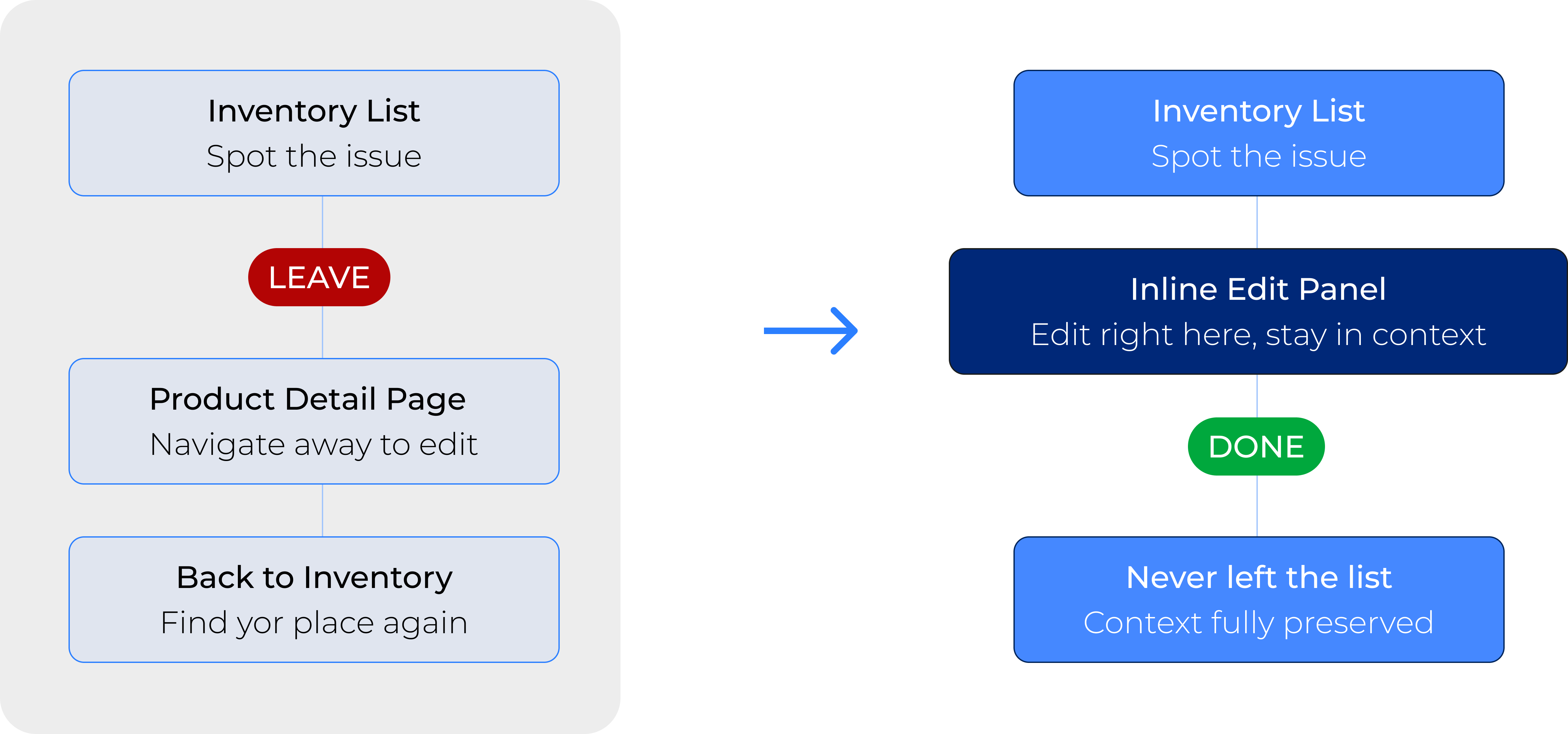
There’s so many steps to click through for one task,
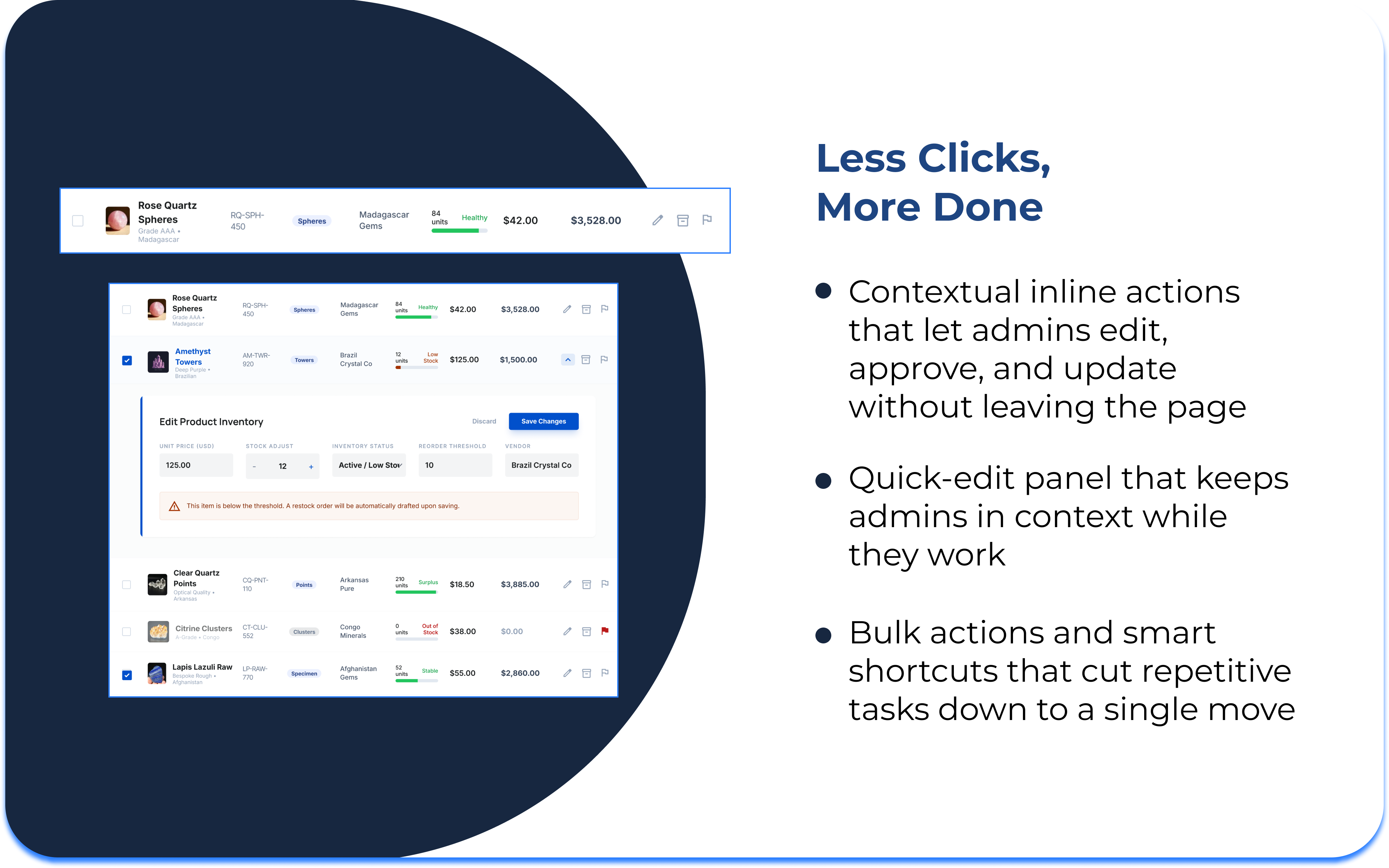
we build any actions you need to take inline, so you never leave the page.
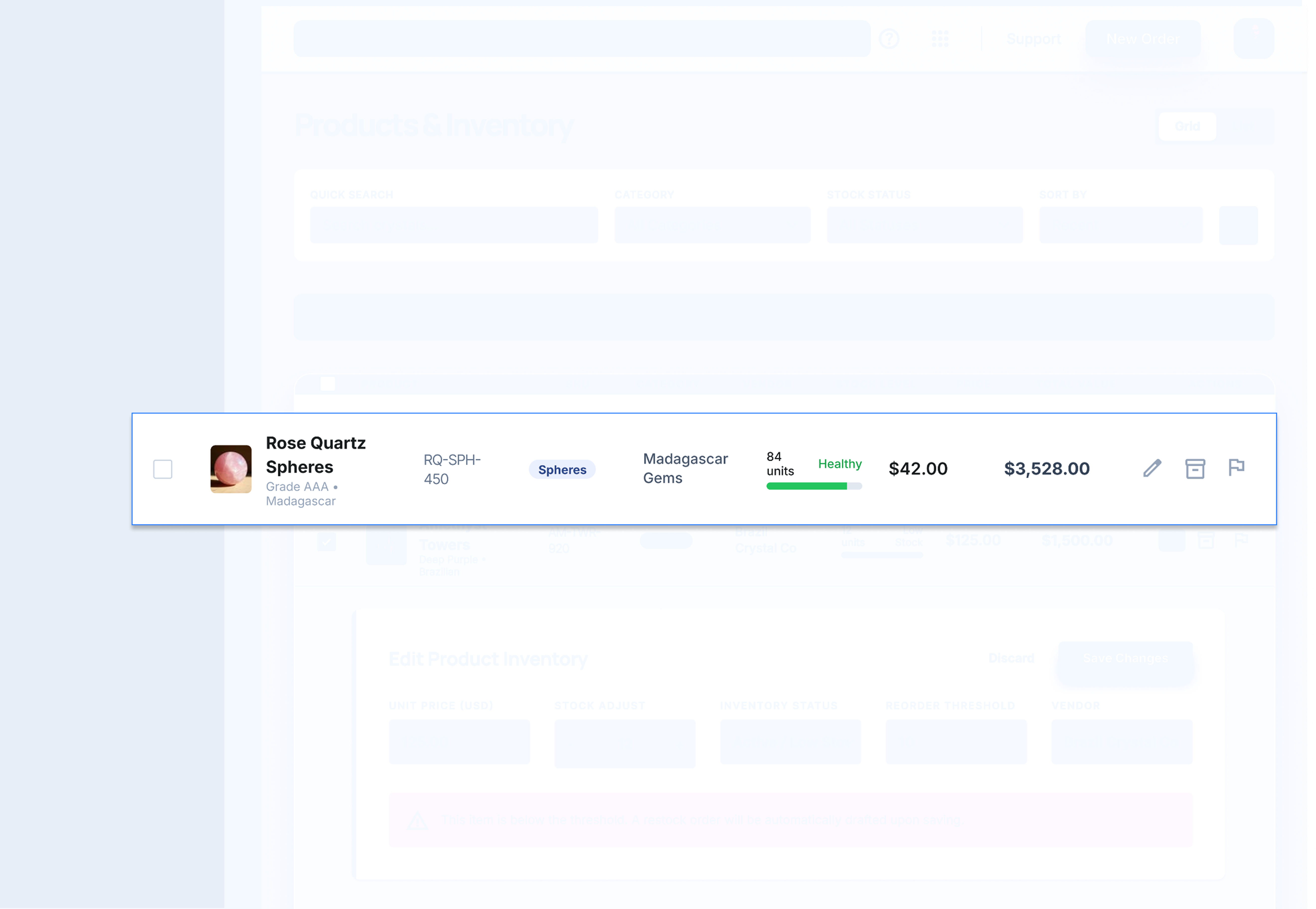
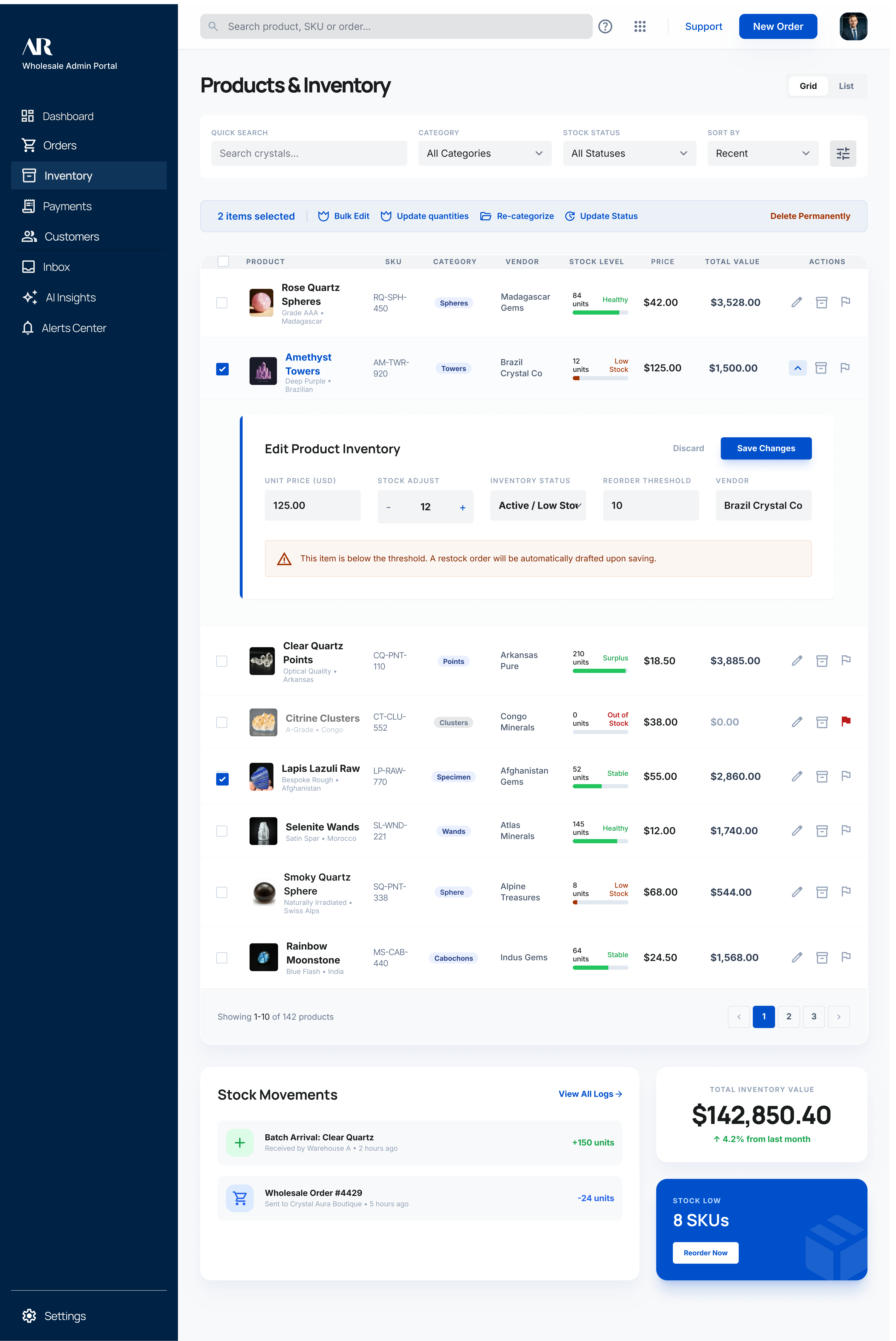
Contextual Inline Actions
Action buttons appear directly on each row. Admins can fix it without leaving the list.
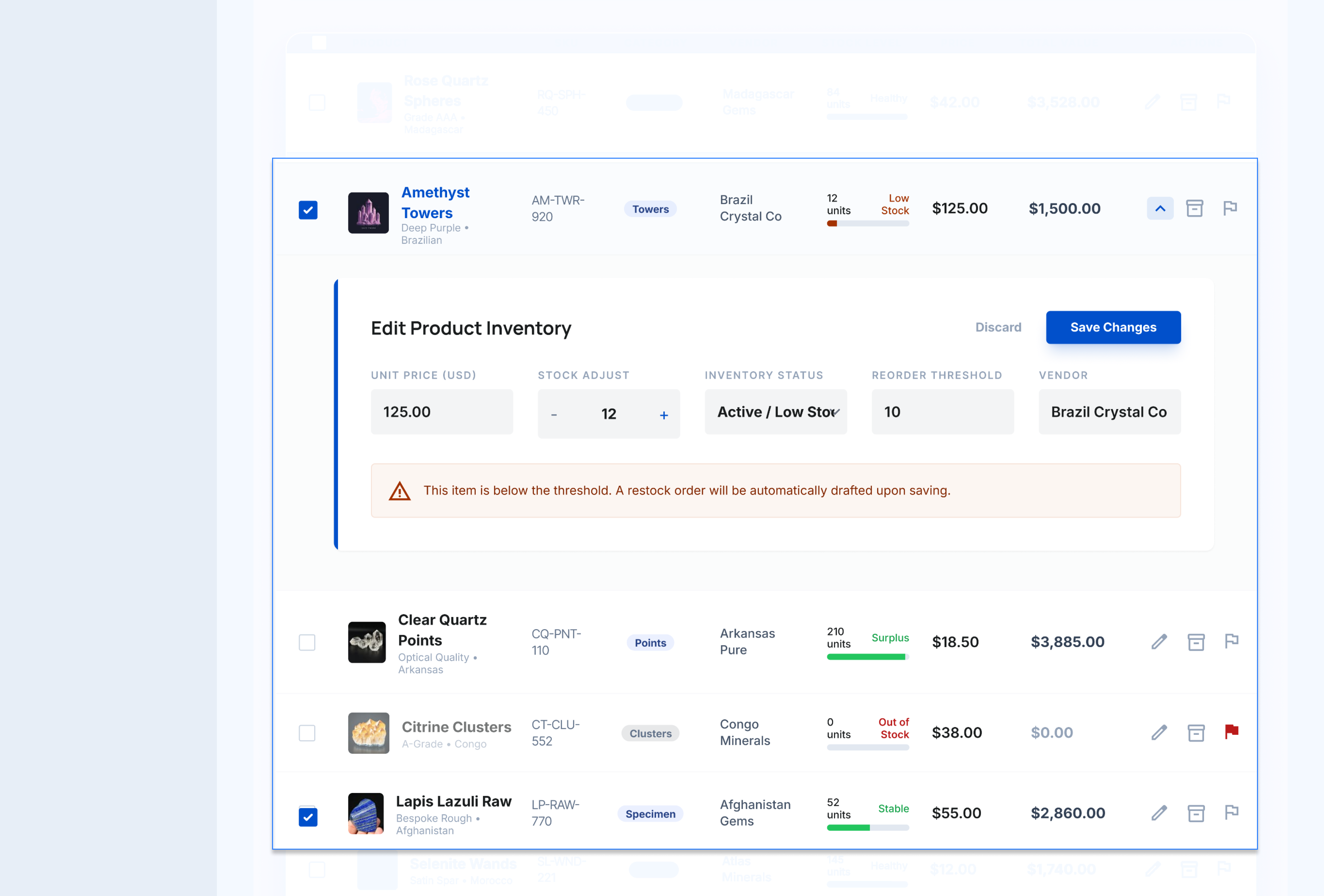
Quick Edit Panel
Focused inline panel,
Admins make changes and close it, returning to exactly where they were.
Bulk Actions
Select multiple items and apply changes in one move instead of repeating row by row.
Inventory Page
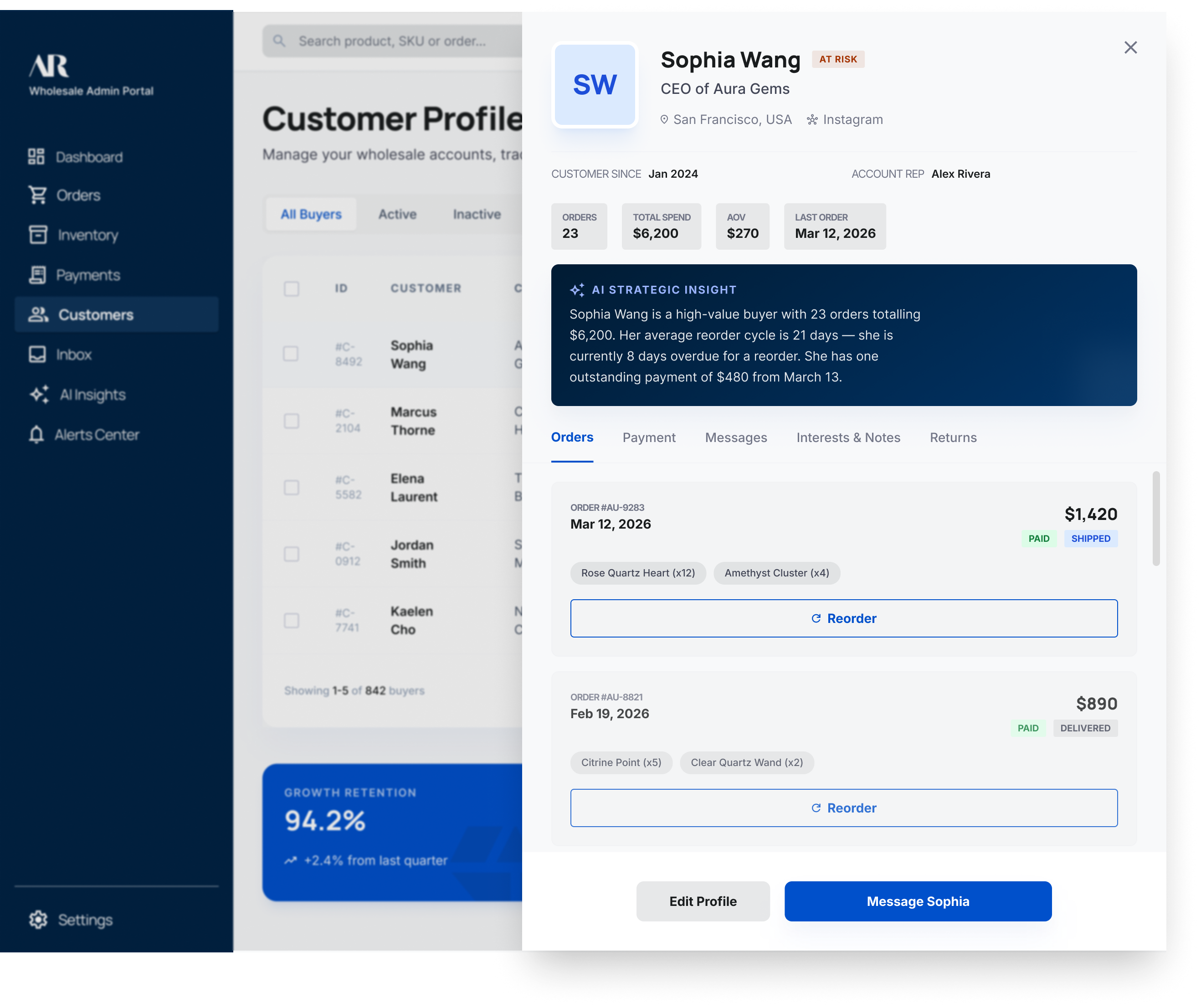
Customer Profile Page

The Platform Thinks With You
Admins have to deal with constant mental load every day. They have to keep an eye on stock, watch for risks, and always think ahead. Most platforms only respond when asked. They show what happened before, but don’t help with what to do next.
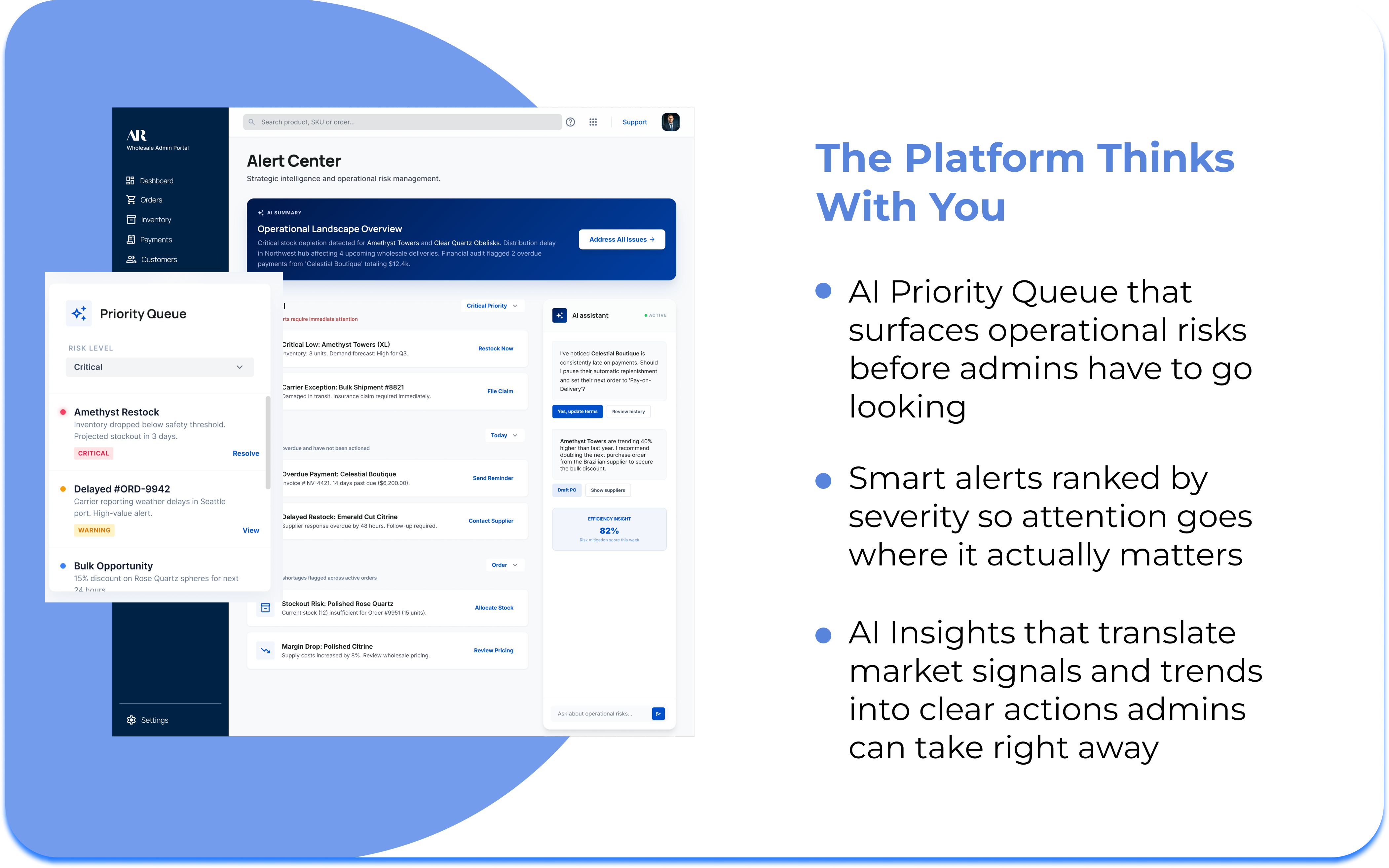
We highlight what needs attention before the admin even starts looking. It flags risks early, suggests actions, and shows what’s coming up, so admins can focus on decision-making rather than searching for problems.
BUILT WITH AI

AI in this platform isn’t a feature you turn on.
It’s a working partner. It watches, learns, and gets ahead of
problems so admins stay focused on what actually needs their judgment.
Detects operational risk
Surface market signals
predicts stock shortages
recommends next actions
We asked admins what was on their minds when they weren’t actively working. Most of them said the same thing: "What am I missing right now?"
Always having to stay alert is exhausting and never really goes away. We saw that the platform should do more than just help admins complete their tasks.
It should also handle the parts of the job that require ongoing attention, so admins only step in when their judgment really matters. That’s why we added AI monitoring, proactive alerts, and suggested actions.
Proactive Risk & Opportunity Alerts
The platform monitors order status, stock levels, and payment timelines automatically.One click takes them straight to the Alert Center to act on it.
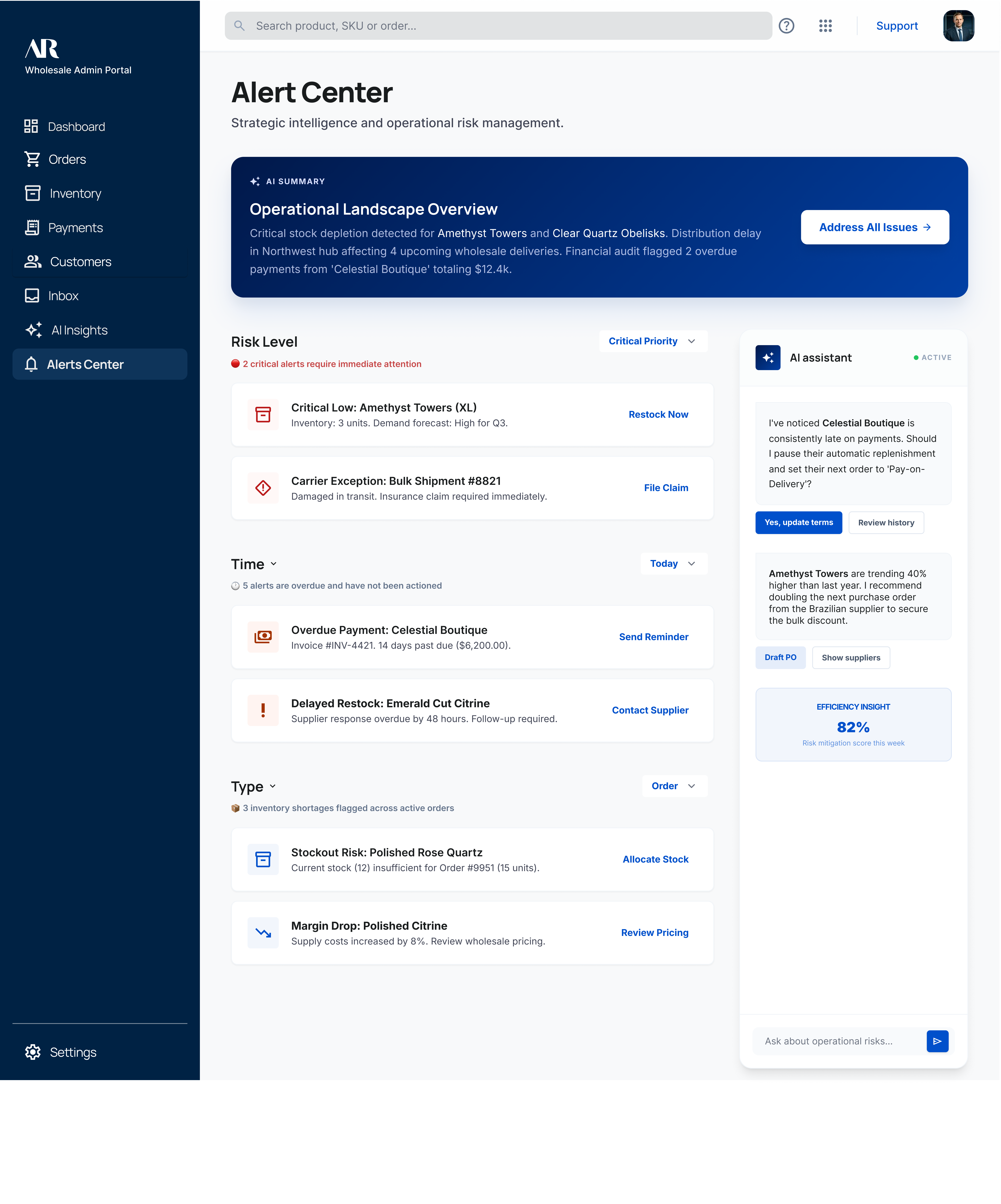
Alert Center
The Alert Center monitors the business, highlights risks, and summarizes key points with AI.
Each alert includes a direct action, and a live AI assistant helps admins make decisions without leaving the page.
AI Assistant for Recommendation
Admins can ask natural language question, and the AI responds with data and suggested action.
One tap to send a follow-up or flag for review.
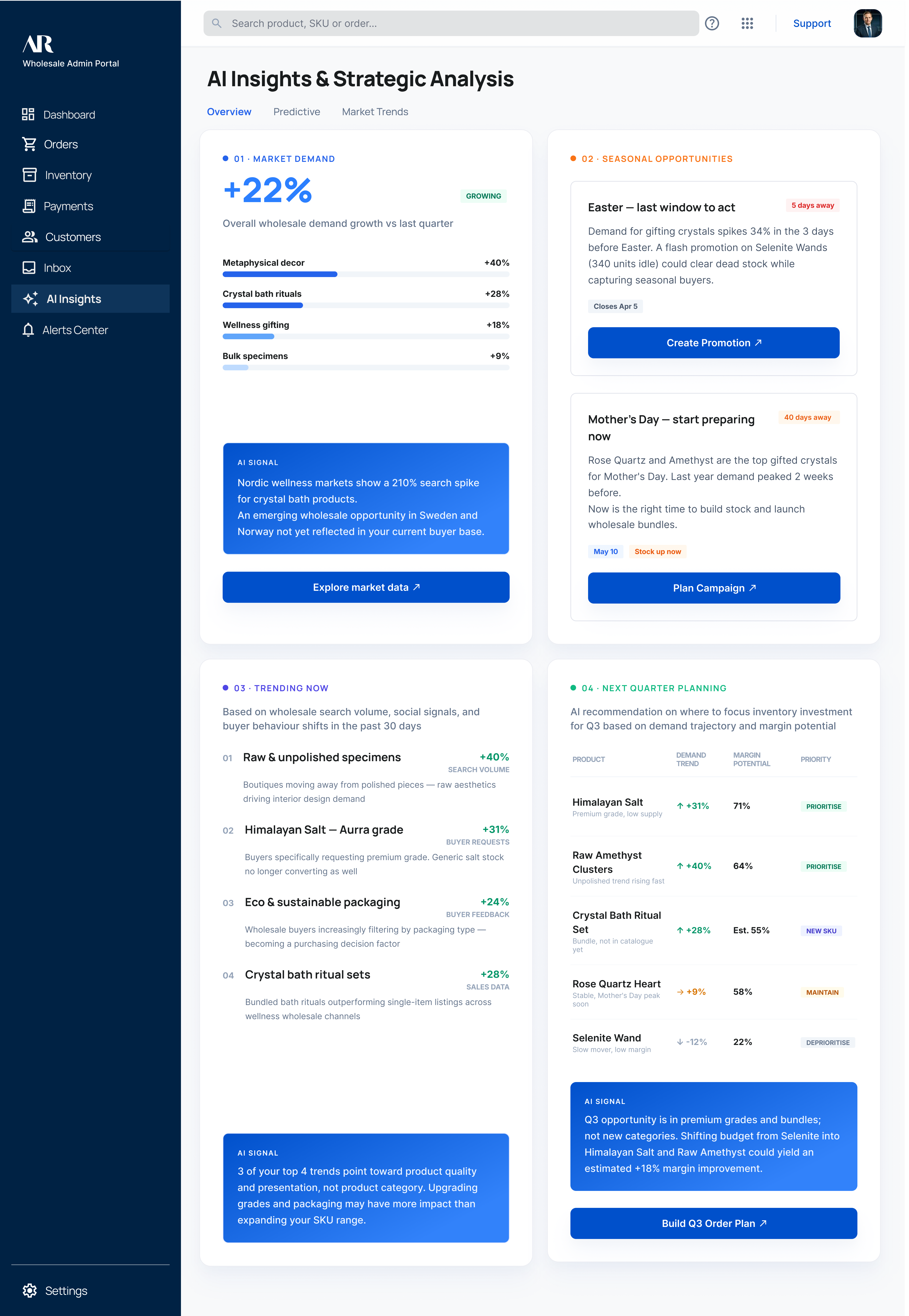
AI Insights on Dashboard
AI Insights & Strategic Analysis translates market signals into clear direction, highlighting trends, opportunities, and risks.
Each section ends with an AI Signal, giving admins a clear next step.
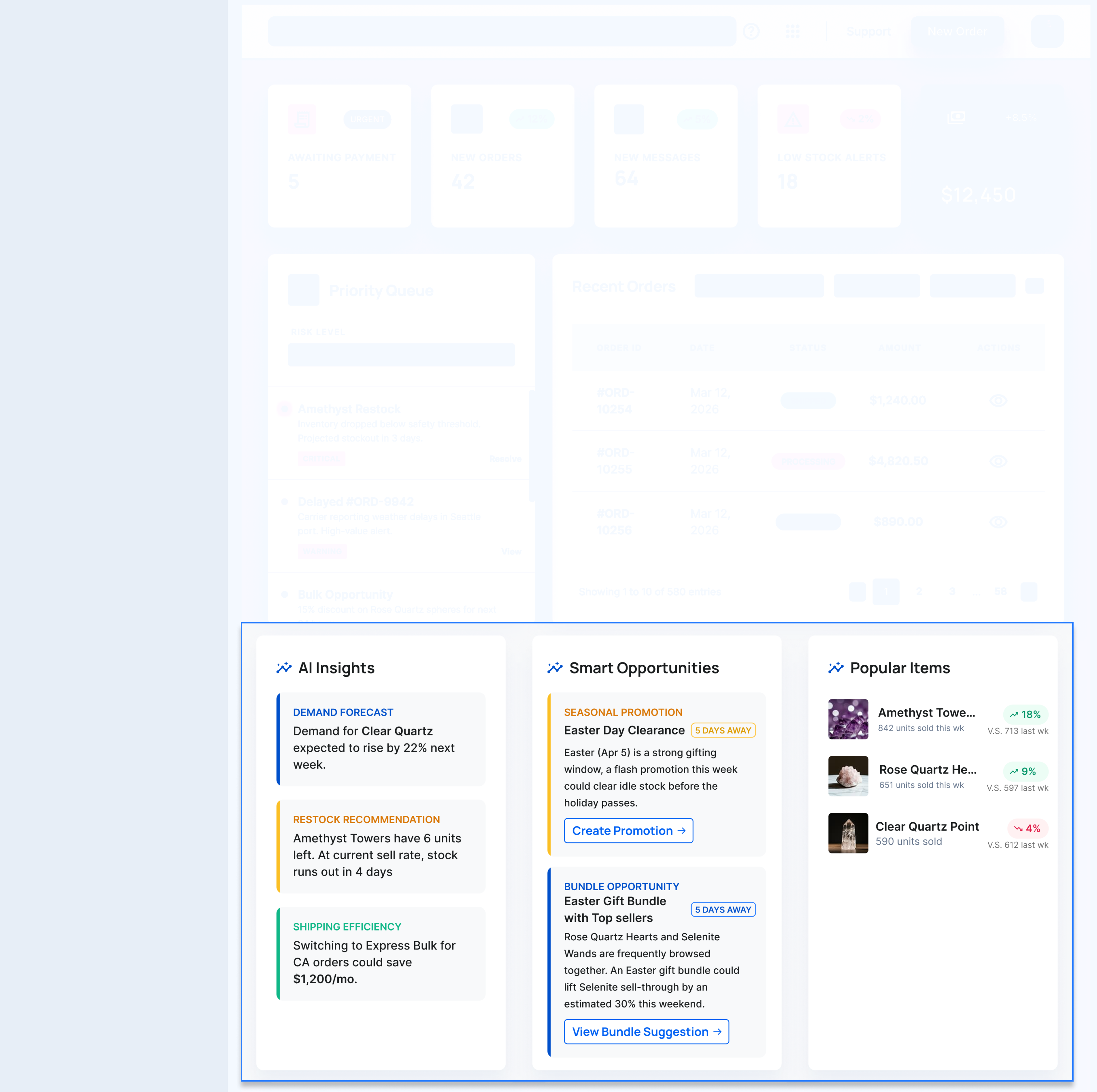
Business Intelligence at a Glance
Revenue trends, top buyers, best-performing SKUs, and order velocity are summarized without manual reporting.
Admins see the health of their business from this panel.
AI Insights Page
Alert Center Page
Prototype
This walkthrough shows the full admin journey behind the inventory management experience, from getting a quick overview to reviewing issues, understanding context, and deciding what to do next.
The goal was to create a more proactive workflow that helps admins stay ahead of problems, reduce mental load, and move through complex tasks with greater clarity and confidence.
What Came Next
As we worked through this project, we realized that helping users see what needs attention is only part of the solution.
They also need a faster, more natural way to search, ask questions, and move toward action. That insight led us to begin exploring AI Search as a next direction. It’s still evolving, but it has already become a meaningful extension of this work.













_Page_1%201.png)